
Humidity doesn’t “ruin” curls—humidity exploits weak points in the hair’s surface. When curls absorb moisture from the air, strands swell, the cuticle lifts, and your curl clumps separate into puff, halo frizz, and softness that won’t hold.
Fizz Control in Humidity
Frizz Control in Humidity:
Keep Curls Defined (Without Going Pin-Straight)

A frizz-control approach that actually lasts is rarely one product or one appointment. It’s a two-part solution: cuticle control (often with a curl-safe smoothing option) paired with a humidity-proof routine that sets strong clumps and keeps them grouped through day 1–3.
The Core Idea: Why Humidity Creates Frizz in the First Place
Frizz in humidity isn’t random. It’s physics plus hair structure.
Curly hair tends to be more vulnerable because the cuticle is often slightly raised by nature—and it can become even more porous from color, heat styling, sun exposure, or mechanical wear (brushing, rough towel drying, constant friction).
When the air is humid, your hair tries to “equalize” moisture. Water vapor enters the strand, the strand swells, and that swelling breaks the integrity of your curl clumps. Once clumps split, you don’t just lose definition—you lose the shape that makes curls look intentional.
This is why humidity frizz often shows up as:
- A halo around the crown and hairline
- Puffing through the mid-lengths
- Curl groups that look fuzzy or “separated” rather than cohesive
The fix is not to fight frizz after it happens. The fix is to prevent clumps from breaking in the first place.
What “Frizz Control” Means (and How We Keep Your Texture)
Many curl clients hesitate when they hear words like keratin or smoothing—and that concern is valid. Some treatments are designed to relax texture.
A modern frizz-control service can be positioned differently:
It’s about reducing cuticle roughness, improving softness and manageability, and increasing humidity resistance—without erasing your curl pattern.
Think of it this way: the goal is not to make your curls straight. The goal is to make them behave—so they stay grouped, feel smoother, tangle less, dry faster, and look more consistent from day 1 through day 3.
If you want control but still want curls, the service choice and technique should reflect that.
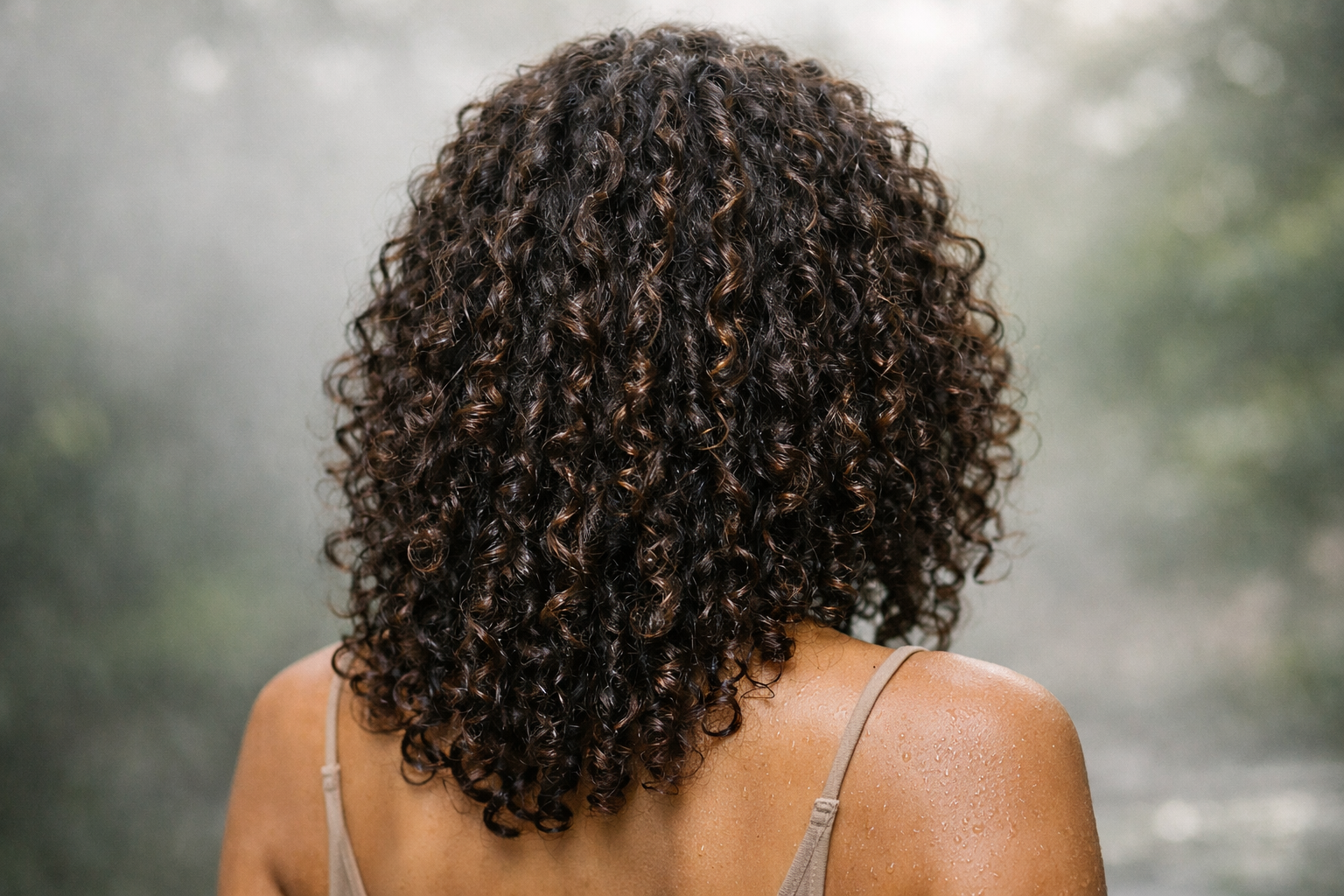
Who This Service Is Best For
This approach is especially strong for clients who expand dramatically in humid weather and feel like styling doesn’t survive past day one.
It tends to be an excellent fit if you have:
- Waves to curls in the 2B–3C range that puff up easily
- Definition that looks great wet but falls apart once dry
- A halo that returns no matter what product you use
- Hair that feels rough, tangles quickly, or takes forever to dry
If you have tighter coils (4A–4C), frizz control can still be beneficial—but the priority should be hydration balance + gentle cuticle smoothing that respects your volume goals. The objective is control and softness, not flattening.
The Real Triggers That Make Humidity Frizz Worse
Most humidity frizz comes from a few recurring issues. You don’t need to fix everything—just the right things.
High porosity: If your cuticle is open, moisture moves in and out quickly. Humidity will always have an easier time disrupting your definition.
No hold in the routine: Hydration alone is not humidity protection. Without a hold step, curl clumps don’t have structure, so they separate the moment moisture hits.
Too much touching while drying: If curls are separated before they set, you’re basically inviting halo frizz.
Once you address those three, humidity stops feeling like a guaranteed bad-hair forecast.
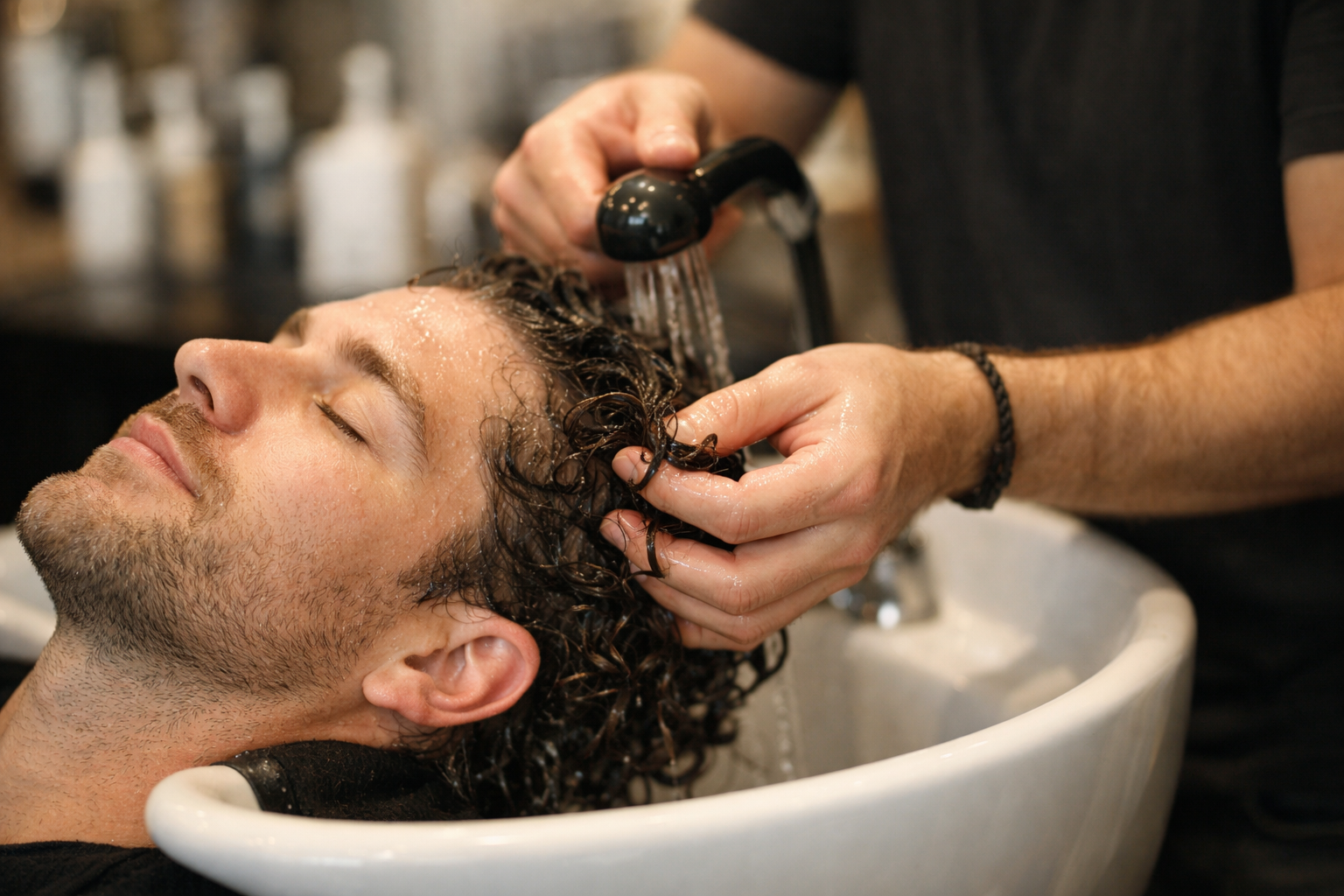
The Humidity-Proof Framework (How We Build Lasting Results)
To make frizz control last, we use a simple three-layer framework. It’s easy to remember, and it explains why some routines feel “hit or miss.”
Layer 1: Cuticle control (in-salon)
A curl-safe smoothing/frizz-reduction option improves manageability and reduces surface roughness—the thing humidity loves to attack.
Layer 2: Clump formation (wash day)
Definition begins with saturation and sectioning. Strong clumps are the foundation of everything that follows.
Layer 3: Hold and set (drying)
Hold keeps clumps grouped when humidity arrives. Setting (without over-touching) locks definition in place.
When these layers work together, you get the difference between “my hair can’t handle humidity” and “I know exactly what to do.”
A Simple Wash-Day Routine That Works in Humidity
You don’t need a complicated routine—just the right order.
Start with a cleanse that removes buildup without stripping. If buildup is present, definition suffers and curls won’t clump cleanly.
Condition for slip, then rinse thoroughly. The goal is softness and glide, not residue. Heavy residue can make curls feel coated and undefined.
Style on wet hair. Not damp—wet. Water is what helps curls group into clumps. If your hair starts drying mid-styling, frizz is already forming.
Then follow this order of operations:
Water → Slip → Hold → (Optional) Seal
Water gives clumps a chance to form. Slip (leave-in or lightweight cream) helps you keep clumps intact while distributing product. Hold (gel/foam/mousse) keeps those clumps grouped as the hair dries. If needed, a tiny amount of sealant on the outer layer can help reduce humidity absorption.
The biggest mistake in humidity is skipping hold because your hair “feels soft enough.” Softness without structure equals puff.
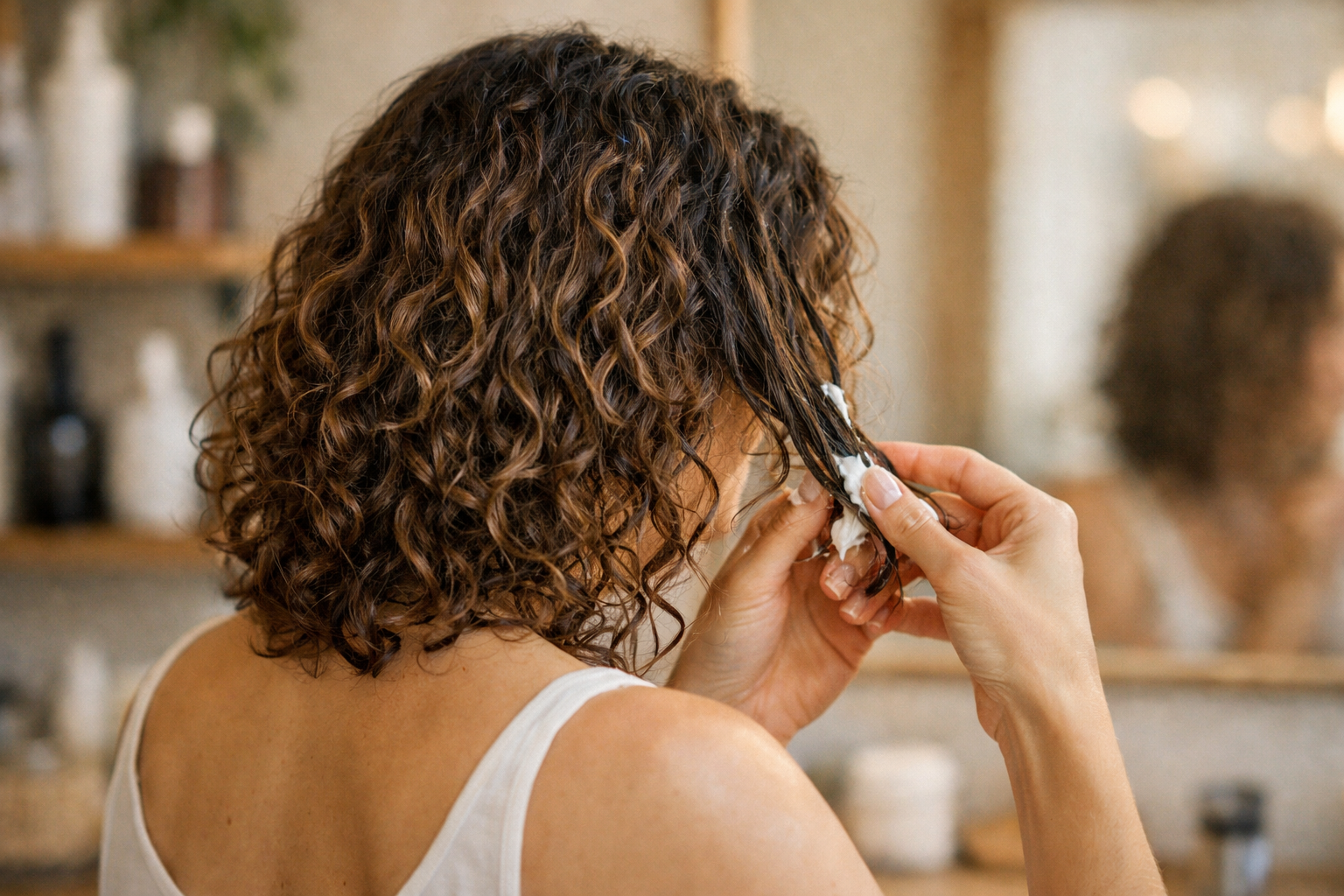
Drying Strategy: Where Most Frizz Starts
If you want one rule, it’s this: touch less while your curls set.
Air-drying can work well, but in humid conditions it can take so long that moisture disrupts your curls before they finish setting.
Diffusing can be a game-changer because it sets the curl cast faster—if it’s done gently. High airflow and constant handling can create frizz even with perfect products.
A reliable approach is to diffuse carefully until a light cast forms, then reduce touching until your hair is fully dry.
What Results You Can Expect
With a frizz-control service paired with a routine reset, most clients notice improvements that feel practical—not just “pretty in the chair.”
You can typically expect:
- Less halo frizz around the crown and hairline
- Softer texture and improved shine
- Better curl grouping (definition lasts longer)
- Faster styling because hair behaves more predictably
- Day 2–3 refresh that feels realistic instead of a full restart
The goal is wearable curls in humidity—without feeling like you need to flat-iron to survive the weather.
How Long Does Frizz Control Last?
Longevity depends on the specific smoothing option and your maintenance routine, but most clients see meaningful improvement for weeks to a few months.
To extend results, keep your cleansing gentle (unless you truly need a clarifying reset), keep heat moderate, and stay consistent with the “hydrate + hold” structure on wash day.
FAQ
How do I stop curly hair frizz in humidity?
Build strong clumps on wet hair, use a hold product, dry with minimal touching, and seal lightly if needed. For severe frizz, pair this routine with a curl-safe frizz-control smoothing service.
Does keratin ruin curls?
Not always. Some services are designed to relax texture, but curl-safe frizz-reduction options can reduce puff and halo frizz while keeping your natural pattern.
What product type works best in humidity?
A combination usually performs best: a lightweight leave-in for slip plus a gel/foam for hold. Hold is what keeps curl clumps together when moisture hits.
Is frizz always a sign of damage?
No. Frizz can come from porosity, routine order, buildup, or touching curls while drying. Damage can increase frizz, but healthy curls can still frizz in humid air.
How can I make day 2 curls look good in humidity?
Refresh only where needed: mist water, re-form clumps with fingers, add a small amount of styler to problem areas, and avoid soaking the whole head.
The Bottom Line
Humidity doesn’t have to decide how your curls look. When you combine cuticle control (a curl-safe frizz-control smoothing option) with a simple routine that builds clumps and uses hold correctly, your hair becomes more predictable, softer, and easier to refresh—even in sticky weather.
Ready to stop fighting humidity? Book a Frizz Control / Smoothing session and leave with a clear plan for defined, wearable curls that last beyond day one.


